Sound familiar?Smithfield
- The call
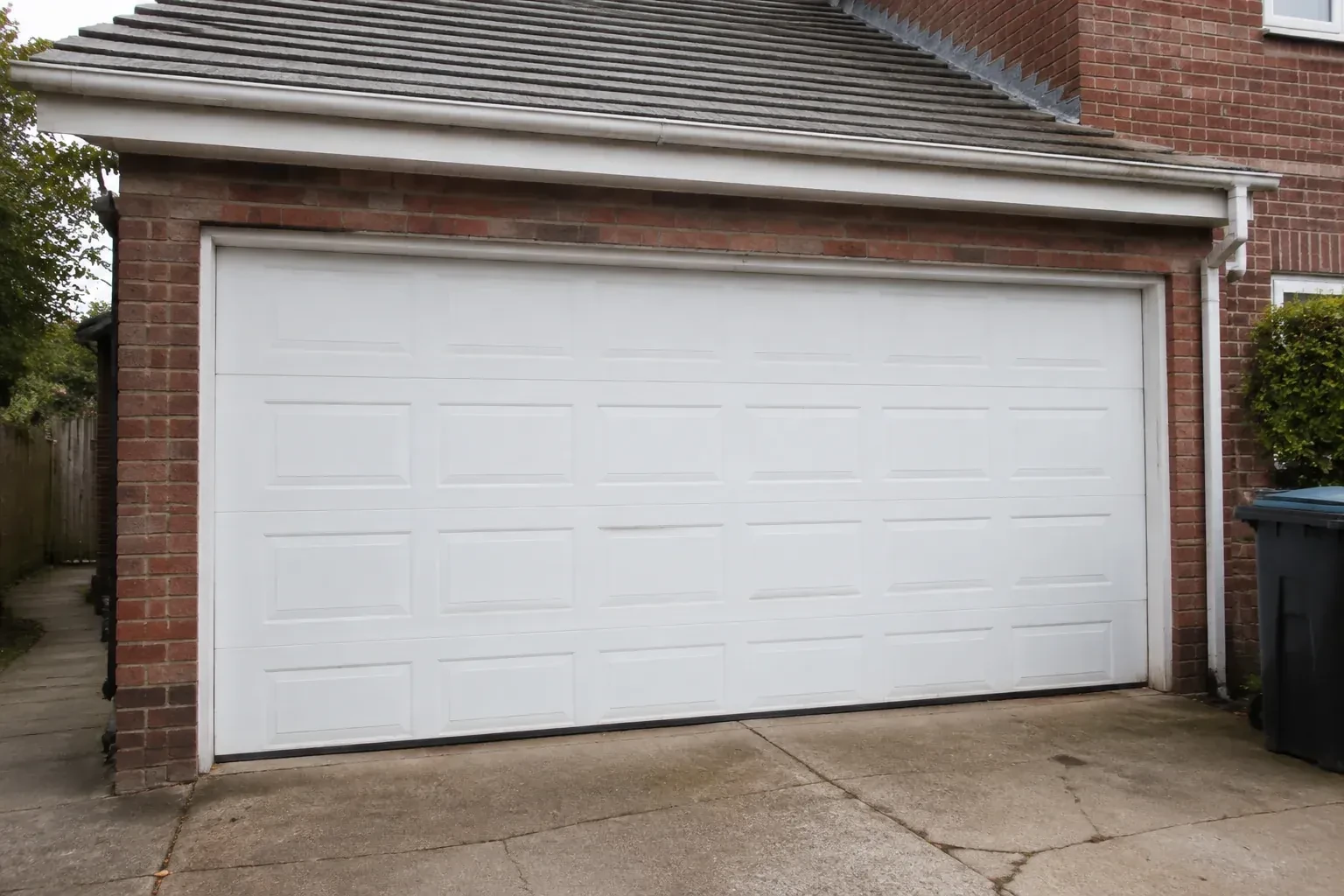
- Cold weather has exposed a widening gap below the closed door. The bottom retainer is bent, the rubber seal is split, and uneven seating lets drafts and slush enter the work area.
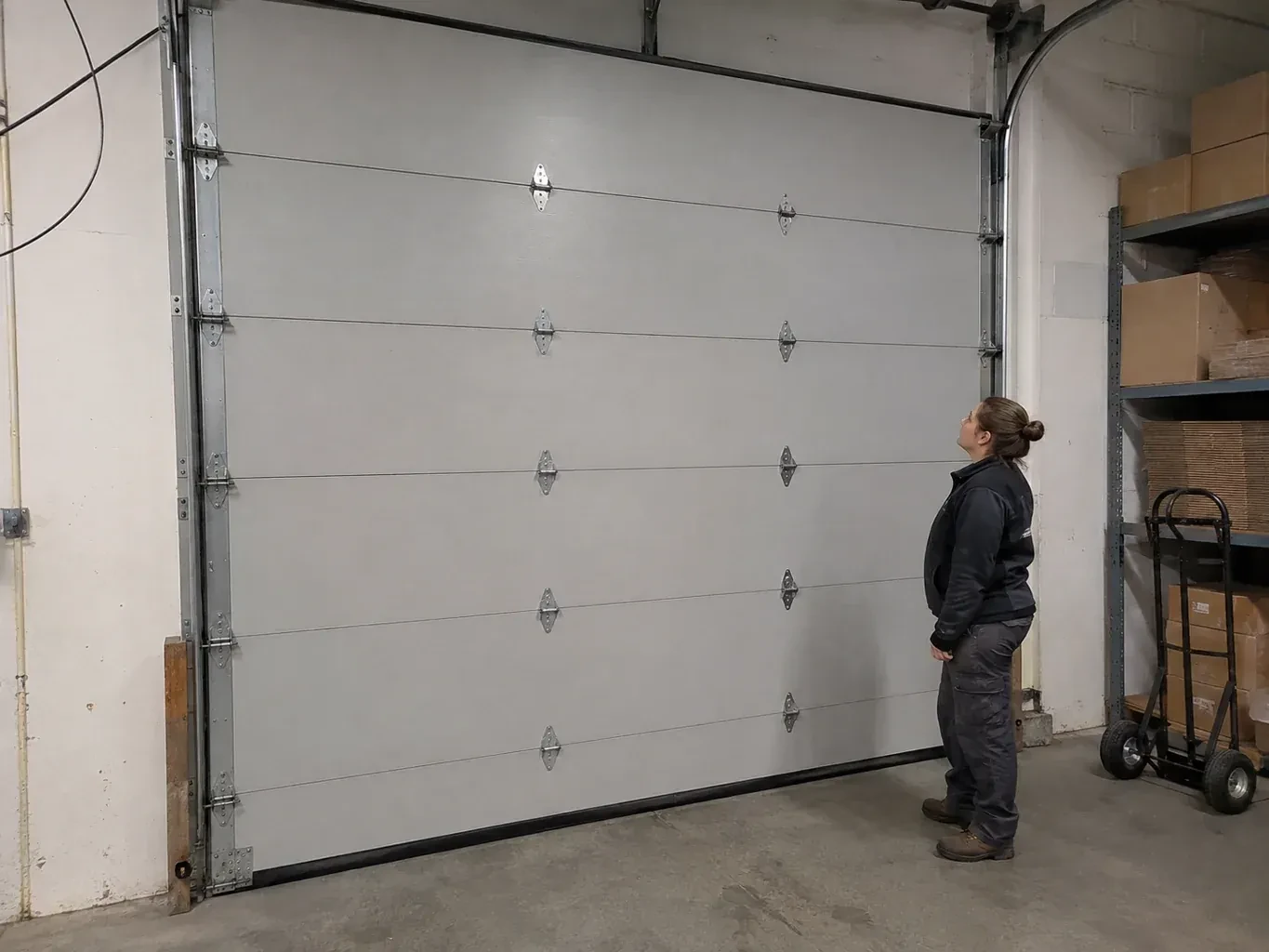
The door reaches the floor, then reverses before staying closed. The threshold is clear, but a sensing edge is distorted and one photoelectric sensor has moved out of line with its partner.
A powered door works properly only when its mechanical assembly and operator agree. Repair may involve restoring smooth manual movement first, then checking the drive connection, limits, brake or clutch, control station and entrapment-protection devices. This order keeps an operator adjustment from masking a heavy, binding or unbalanced door. After the underlying hardware moves freely, travel settings are brought back to the actual open and closed positions, sensors are aligned, and the system is tested from each normal control point.
Sound familiar?Smithfield
Commercial Sectional Door Repair · Smithfield
Scene 1
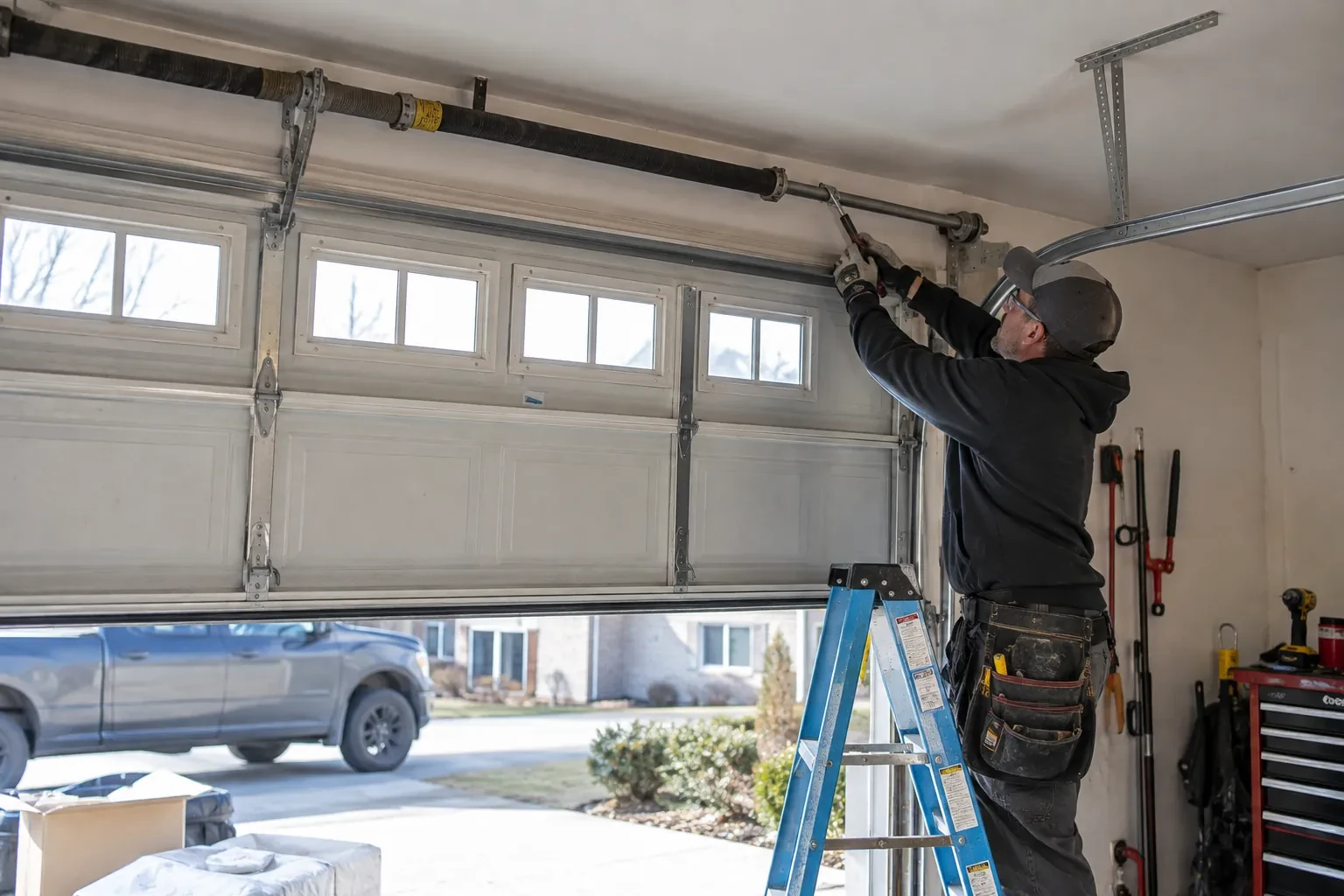
A crooked bottom edge leads to a side-by-side comparison. Cable condition and length, drum grooves, shaft position, bearing movement and bottom fixtures are viewed together. The technician notes whether one cable is slack, crossed or frayed and whether a roller has left its normal track position. Measurements at the tracks show if the guides remain parallel and plumb. The door is then secured so its weight cannot deepen the imbalance during inspection. These findings reveal whether the repair belongs in the lifting system, track alignment or impact-damaged hardware.
Scene 2
The affected section is supported while hinges, rollers and connected hardware are transferred or renewed. The replacement is matched for thickness, construction, profile and required reinforcement so it fits the neighbouring sections and carries the same hardware pattern. Bent end stiles or struts are addressed as part of the section assembly. Rollers are returned to the correct hinge positions, section joints are aligned and fasteners are set securely. Track clearance is then checked through the curve so the new panel travels without rubbing or opening gaps.
Scene 3
The renewed bottom retainer and seal follow the floor more evenly, reducing the route for drafts, grit and slush. The threshold still benefits from regular clearing, especially when packed snow or ice changes where the door lands. Drainage near the opening should direct meltwater away instead of leaving it beneath the rubber. Staff can inspect the seal ends for shrinkage, tearing or displacement during cleaning. Catching a small gap early protects the lower panel and helps keep corrosive moisture away from nearby brackets and cable connections.
What shapes the quoteRice Lake Garage Door Repair Co.
FeesSame any hour
The opening is kept clear and the door is stabilized in its current position before diagnosis. A cable may be displaced, a roller may have left the track, a spring may have failed or the operator may be holding the load. Support and controlled energy handling come before any attempt to move or dismantle the affected assembly.
Clear vehicles, pallets and stored materials from both sides of the opening and arrange another traffic route. Have the door number, model information, control location and service record available if possible. Note where in the cycle the symptom occurs and whether there was an impact or recent change. Access to the electrical isolation point may also be needed.
Numbered end hinges position each roller progressively farther from the panel as the sections rise. That changing offset lets the stacked door follow the track curve while maintaining its shape. Installing a hinge in the wrong position can alter alignment and clearance. Centre hinges have a different role: they connect sections across the width without carrying track rollers.
NorthumberlandOntario
Commercial Sectional Door Repair · Cobourg, Alnwick/Haldimand, Brighton, Cramahe, Hamilton, Gosport, East Colborne, Coverdale, Norham, Codrington, Orland
Every square is one home in a hundred.
On-site assessment
The door reaches the floor, then reverses before staying closed.
(289) 677-1944, open 24/7.
On-site assessment preferred · (289) 677-1944, open 24/7