Skip to content
RiceLake Garage Door Repair Co.Open 24/7 (289) 677-1944
Illustrative garage doors scene — Extension Spring Replacement, Hamilton

Springs · Hamilton

Extension Spring Replacement

The door climbs with the left corner ahead of the right, then twists as it turns into the ceiling track. Looking up, the spring on the right side is stretched longer than its partner, with daylight showing between the coils.

In plain words

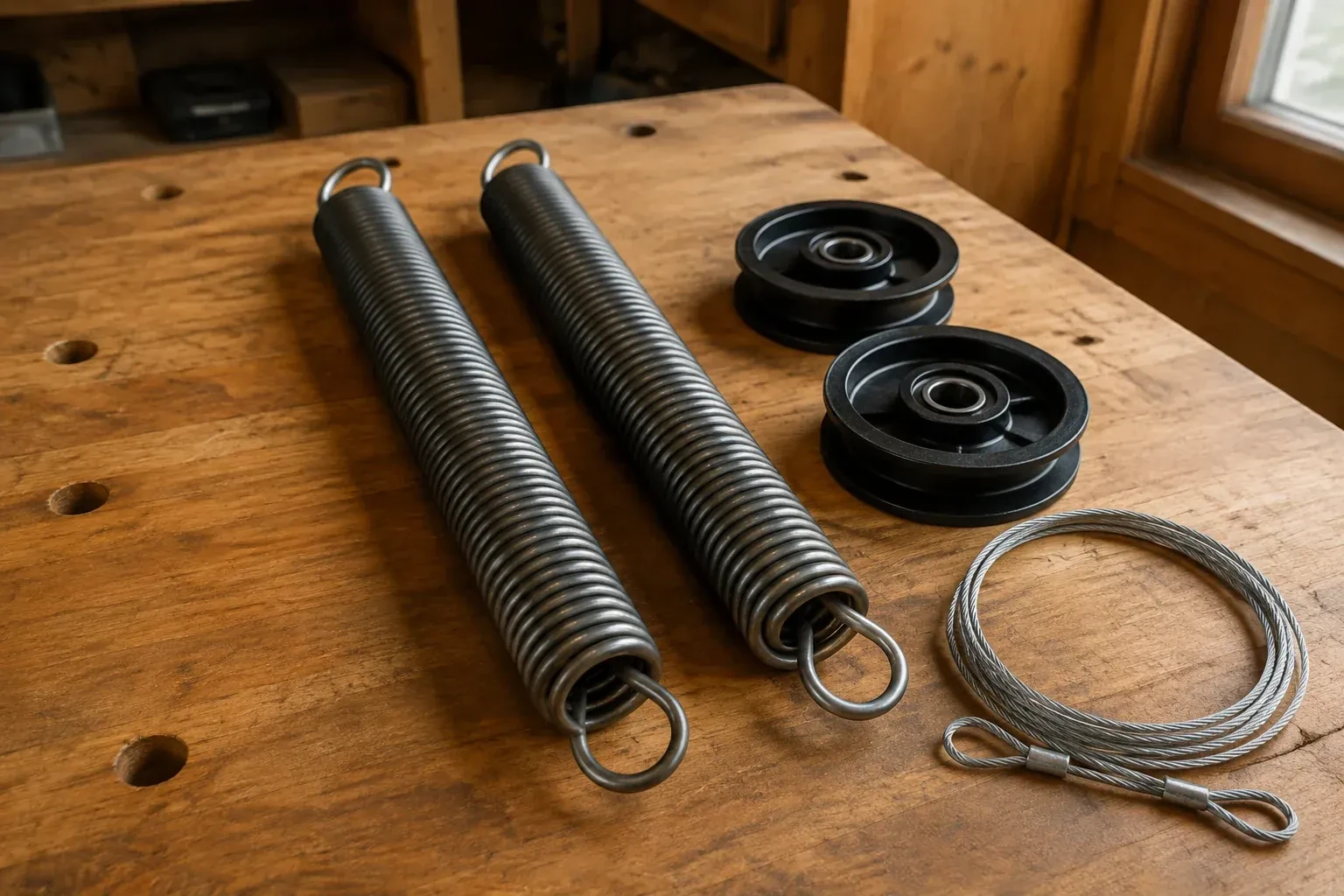
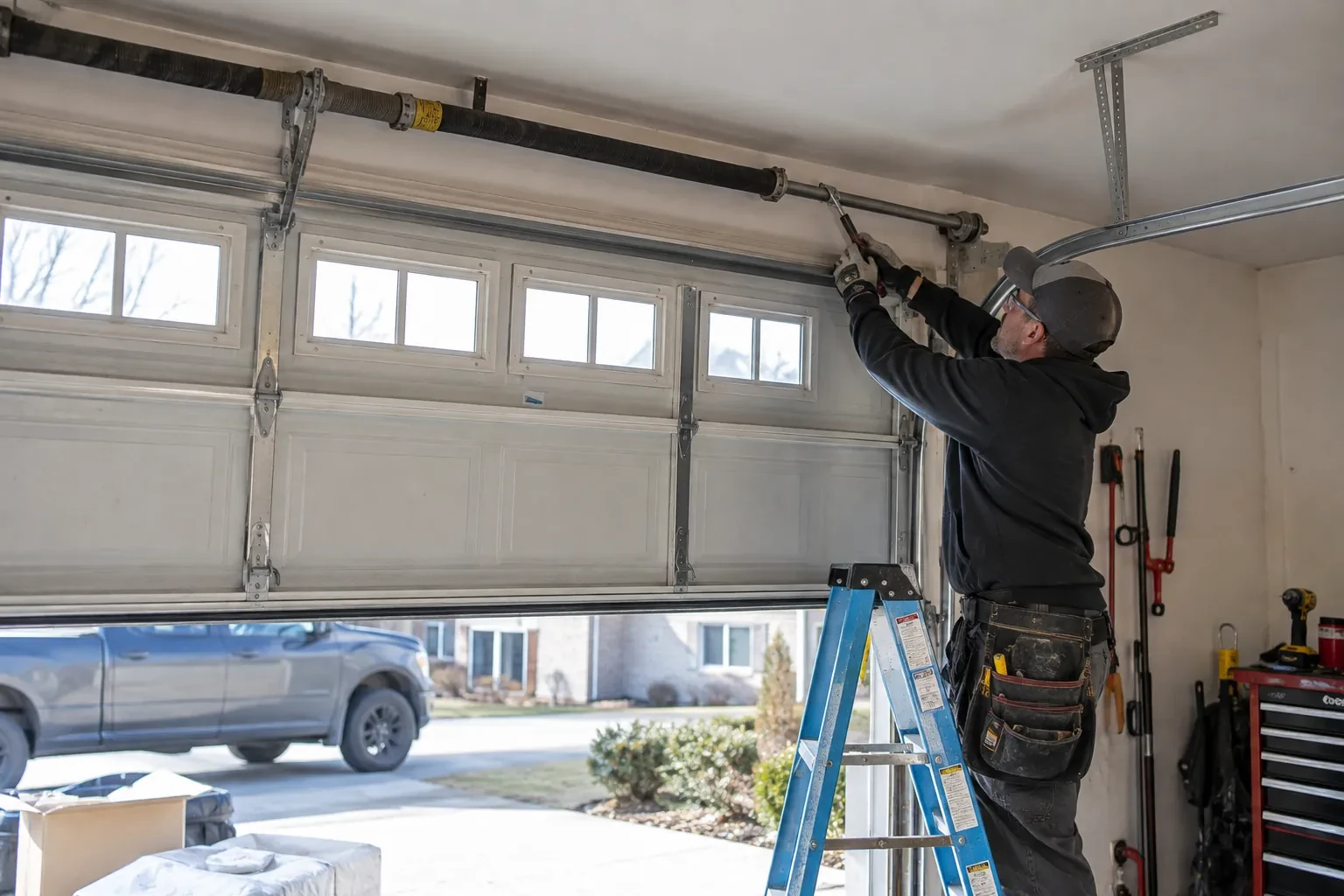
Garage doors are balanced by one of two spring systems, and the extension kind is the one you find on many single-car doors and older detached garages. Instead of a spring wound on a shaft above the opening, an extension system uses two springs stretched along the horizontal tracks, working through pulleys and cables. It needs less headroom, which is why it suits garages with a low ceiling. Replacing these springs is its own service with its own parts: springs chosen by door weight, pulleys, S-hooks and containment cables. A technician confirms which system is on your door before any part is chosen.

Sound familiar?Hamilton

The call
One of the springs beside the track is hanging loose at the front end, its pulley dangling, and a length of cable lies slack along the top of the door. The door sits slightly crooked and the opener reverses whenever it tries to close.
NextHow the visit goes

Extension Spring Replacement · Hamilton

How the visit goes

Illustrative garage doors scene — Hamilton
  1. Scene 1

    Containment cables, present or missing

    The question the industry's own inspection checklist asks of every extension-spring door is whether each spring has a cable running through its centre, anchored at both ends. The technician checks for it on both sides, then checks its condition: a cable that is frayed, kinked, anchored to a loose screw or simply tied off to the hanger is not doing its job. Doors installed decades ago often have none at all, and doors that had a spring changed by a previous owner sometimes have one side fitted and one forgotten. Fresh containment cables go on with the new springs, and their anchor points are set into solid framing so that a spring which breaks stays on its cable.

  2. Scene 2

    Threading the containment cables

    Before a spring is hung, a containment cable is fed through the centre of its coil. One end is anchored at the rear, to the hanger or the framing behind it, and the other is run forward past the pulley and fixed to the bracket at the front of the track or to the wall, with enough slack that the cable never carries load while the spring works. The cable is checked to be clear of the pulley wheel and the lift cable so nothing rubs. Both sides are done the same way, whether or not the old installation had them. A spring that breaks in future is held on the cable rather than crossing the garage.

  3. Scene 3

    Containment cables, and leaving them be

    Your door now has a cable running through the middle of each spring, anchored at the back hanger and at the front of the track. It carries no meaningful load while the springs work, though a trace of slack as the door cycles is normal. Its job begins only if a spring ever breaks, when it holds the pieces on the cable instead of letting them fly. It should not be removed, used to hang anything, or tied back to the wall. If it ever looks badly slack, frayed or pulled from its anchor, call to have it corrected promptly rather than waiting for a routine visit. A home inspector looks for this cable when a house is sold.

In the van

  • Track clamps or locking pliers
  • Bottom brackets and clevis pins
  • Extension springs, matched pair
  • Lift cables
  • Containment (safety) cables

What shapes the quoteRice Lake Garage Door Repair Co.

Rollers, hinges and bottom brackets found worn
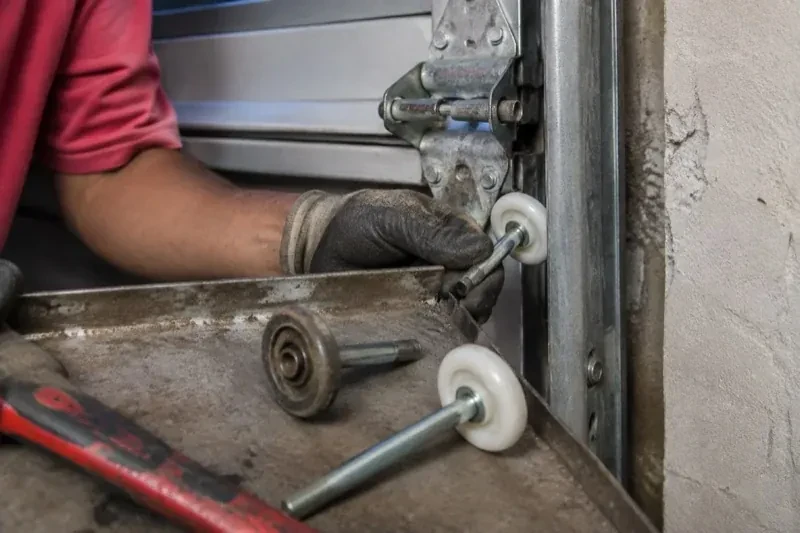
Cracked roller wheels, split hinges or a bottom bracket rusted at the cable pin are pointed out during the inspection and offered as optional items, since the door is already open and secured.
Getting the van to the garage
A detached garage down a shared laneway, a rural property or a building with the bay behind a gate takes more time to reach and set up in, and the quote allows for that.
Pulleys that need renewing
Each side has two pulleys, and a wheel worn to a groove or a bearing that has stiffened is replaced with the springs. The quote names how many and which type.

FeesSame any hour

Have it ready

Before you call · 0 / 3

(289) 677-1944

Homeowners ask

What if the spring hanger has pulled loose from the ceiling?

It is put right as part of the job. The rear hanger takes the full pull of the spring on every cycle, and lag screws driven into thin plywood, a split joist or drywall work loose over the years, which is often why a door slowly goes out of balance. The technician re-fixes the hanger with fresh lag screws into solid framing, or adds a length of angle iron to reach it, before the new springs are hung.

Should I try to open the door by hand before the technician arrives?

No need, and it is easier on the door if you leave it. With a spring broken or slack, the door is unbalanced and heavy, and lifting it can let it drop or twist a section in the track. If the door is stuck partway, leave it there and keep people and the car away from the opening. The technician brings clamps and props, and the door is secured before it is moved at all.

Will the lift cables be changed as well?

They are inspected every time and changed when they show fraying, rust at the bottom loop, or a kink from having jumped a pulley. Cables and springs are generally the same age, and with the door already open and the springs off, fitting new cables adds little to the visit. Bright, tight strands with clean loops can stay and are simply re-routed over the pulleys and set to the new springs.

Hamiltoninformation

NorthumberlandOntario

Town
Hamilton, Northumberland
In business
17 years
Hours
Open 24/7
Nights, weekends and holidays, same fees
Visits
On-site assessment preferred. Request a visit or call.

2021 census: what it means at the door

Every square is one home in a hundred.

  • 55 in 100 homes · older homes
  • About 55% of homes in Hamilton were built in 1980 or earlier, according to the 2021 Census.Where most houses were built a generation or more ago, a good share of garage doors are still the originals: wood or early steel sections on extension springs. Those doors respond well to fresh pulleys, safety cables and a careful balance, and the technician carries the parts for them.
  • Single-detached houses make up about 95% of homes in Hamilton (2021 Census).A detached house with its own garage is a natural fit for upgrades that need space: a jackshaft opener to free the ceiling, a high-lift door for a car hoist, or a wider door when a bigger vehicle arrives. The technician measures the opening and headroom and says what fits.

Source: Statistics Canada, Census Profile

Open Hamilton in Google Maps

On-site assessment

Request a visit.

The door climbs with the left corner ahead of the right, then twists as it turns into the ceiling track.

(289) 677-1944, open 24/7.