Sound familiar?Cramahe
- The call
- Halfway up, the door hesitates and the opener strains before it carries on. Pulled by hand with the opener released, you feel the same catch at the same height, as if a wheel is dragging instead of turning.
Every morning the door announces itself: a rattle on the way up, a grinding squeal on the way down, loud enough that the neighbours know when you leave. A spray of lubricant settled it for a day or two, then the racket came back.
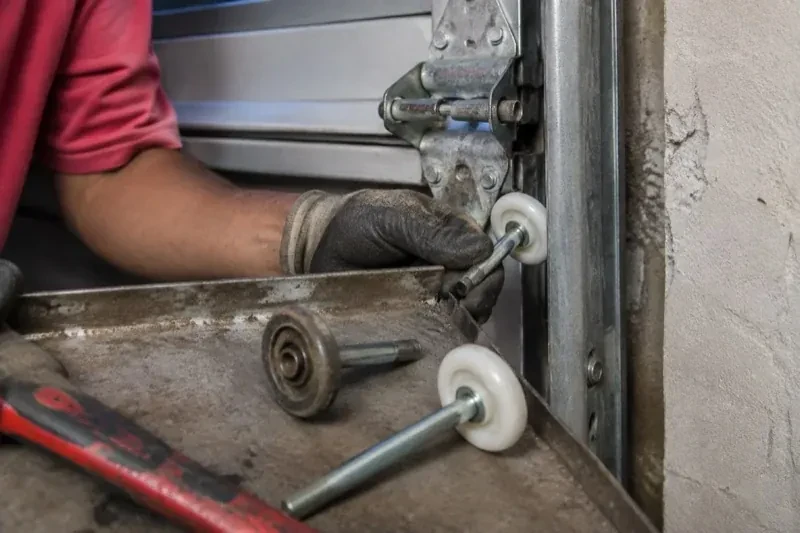
Most of the noise a garage door makes comes from its rollers. Steel wheels on a steel track are loud by nature and grow louder as their bearings dry out and pit, and the plastic wheels fitted to many new doors have no bearings at all, so they simply grind as they wear. Moving to nylon rollers with sealed ball bearings changes the sound of a door more than any other single part, because the nylon tire absorbs vibration instead of passing it into the track and the ceiling. The same visit lubricates the hinges and squares the track so the quiet lasts.
Sound familiar?Cramahe
Garage Door Roller Replacement · Cramahe
Scene 1
In this climate the foot of the track is where trouble collects. Slush and salt carried in on the tires settle in the bottom few inches, freeze overnight into ridges and leave a brine that attacks steel. The technician looks for corrosion on the bottom rollers and their stems, rust on the bottom brackets, ice damage or flat spots on wheels that have been skidding rather than turning, and the state of the lifting cables that share that wet corner. Finding salt damage here steers the recommendation toward sealed-bearing rollers and a thorough track cleaning, and occasionally toward new bottom brackets as well.
Scene 2
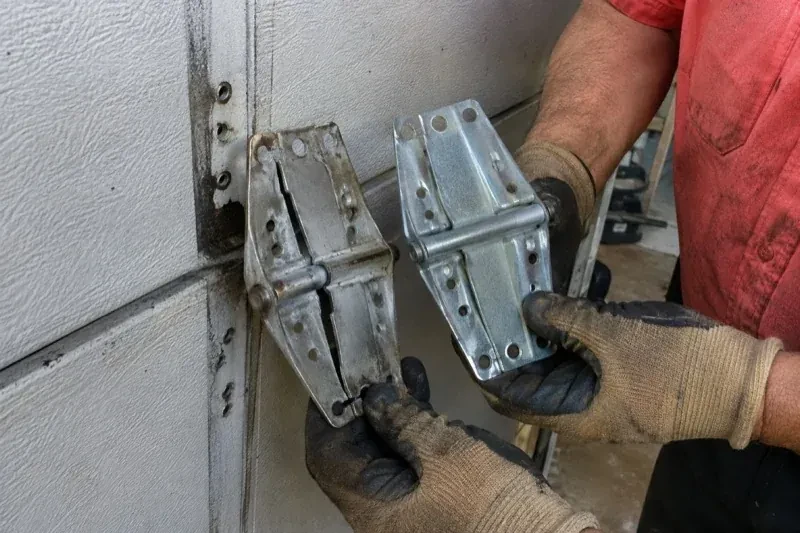
The rollers at the section joints sit in the edge hinges, and each is changed in turn. The technician loosens the hinge fasteners just enough to swing the hinge leaf and ease the old roller out of the track, seats the new roller in the hinge, guides its wheel back into the channel and refastens the hinge with the section held square. Because every other roller stays put while one is out, the door never loses its alignment. Numbered hinges go back to their own rows, since each row holds its wheel at a slightly different offset to follow the graduated spacing of the track.
Scene 3
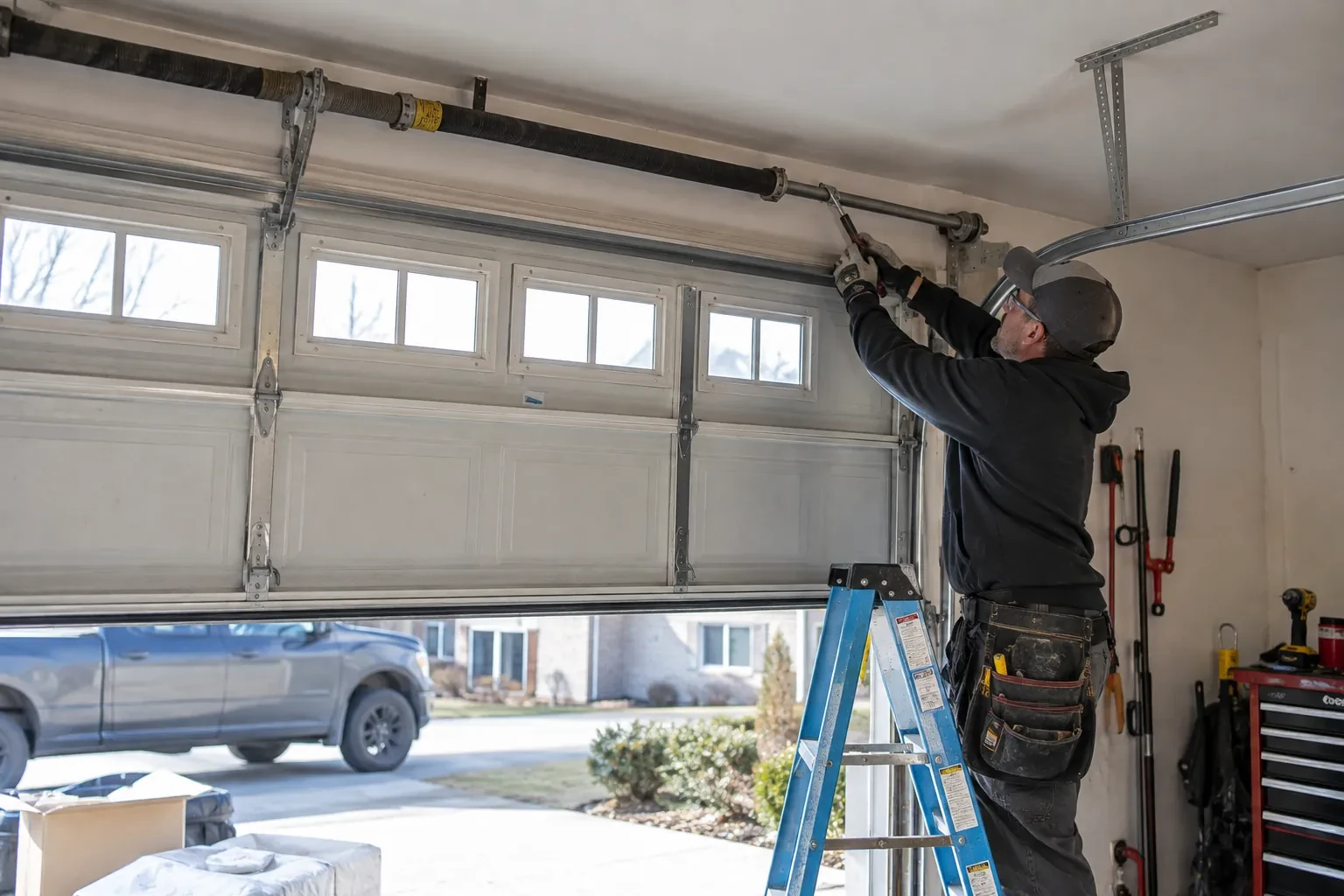
New ball-bearing nylon rollers on a residential door typically give seven to ten years of ordinary use before they are due again, and sealed-bearing types often longer, while a door that cycles many times a day wears everything sooner. A sensible rule is to have the rollers looked at whenever the door is serviced and to replace them as a set when the springs are next changed, since both wear on a similar timeline and the door is already secured for the work. Industry guidance suggests a professional look at the whole door once a year, with rollers on the list.
What shapes the quoteRice Lake Garage Door Repair Co.
FeesSame any hour
Industry guidance suggests a monthly visual and listening check by the homeowner, with the door closed and then in motion, and a yearly visit from a trained door systems technician who goes over springs, cables, rollers, hinges, track, balance and the opener's safety functions. Rollers themselves are worth a look twice a year, and they belong on the list whenever springs or cables are being replaced. A door used many times a day earns more frequent attention.
The curve is where each roller changes direction under load, so it exposes wear that straight travel hides. A wheel worn oval or flat-spotted bumps as it turns the corner, a wobbling stem lets the section lean back as it enters the horizontal run, and a track whose radius has been knocked out of shape pinches or drops the wheel for an instant. Fresh rollers of the right size in a track that has been checked for shape and spacing usually take the shudder away.
By watching where and when the trouble happens and then checking the parts in that spot. Rollers are spun and wiggled to reveal rough bearings and worn wheels; hinges are checked for cracks, elongated holes and loose bolts; tracks are checked for plumb, dents and spacing. A shudder at the curve tends to be rollers, a pop as sections pivot tends to be a hinge, and a rub the full height of the door tends to be track. Often more than one is involved, and the visit covers them all.
NorthumberlandOntario
Garage Door Roller Replacement · Cobourg, Alnwick/Haldimand, Brighton, Hamilton, Gosport, East Colborne, Coverdale, Norham, Codrington, Orland, Smithfield
Every square is one home in a hundred.
On-site assessment
Every morning the door announces itself: a rattle on the way up, a grinding squeal on the way down, loud enough that the neighbours know when you leave.
(289) 677-1944, open 24/7.
On-site assessment preferred · (289) 677-1944, open 24/7