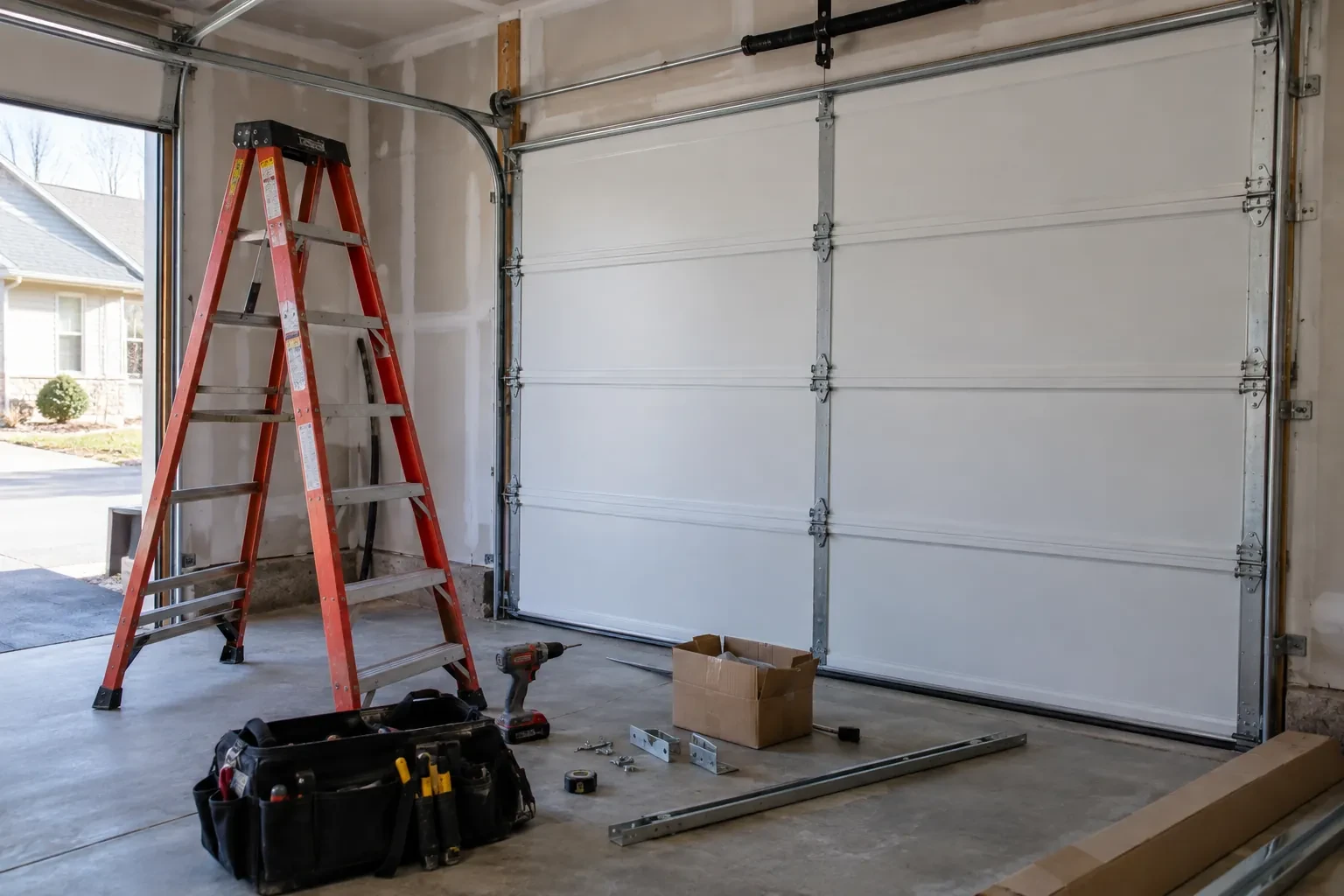
Good advice is worth more than a sales pitch. In this section we explain how doors and openers work, what wears out and why, and how to tell a small job from a big one.
- Bulletin 1Belt-Drive Opener Repair: inside the visitThe most common belt-drive repair is the simplest: the belt has stretched over thousands of cycles and hangs slack under the rail. On its way up it slaps the rail and skips a tooth or two on the sprocket.Read
- Bulletin 2Torsion Spring Replacement: getting readyAfter pulling the red release cord, you tried lifting the door yourself and it would barely leave the floor. A door that used to glide up with one hand now takes real effort, which points to the counterbalance rather…Read
- Bulletin 3Garage Door Hinge Replacement: comparing quotesYes, more often than people expect. The bottom two panels take the contact, and the edge hinge at that joint bends along with the stile behind it, so the panel edges rub and the roller leans.Read
Homeowners ask
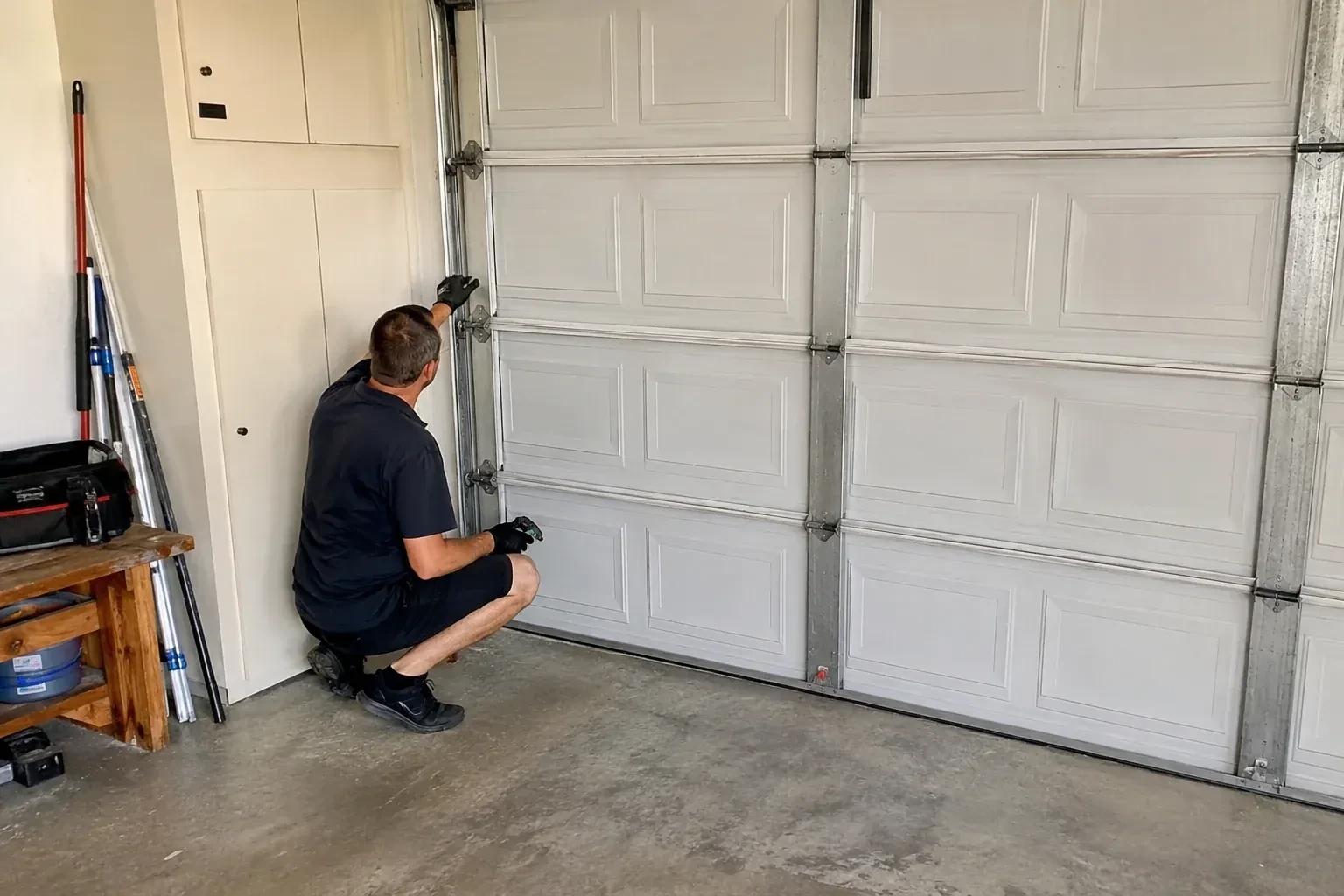
Repair & Maintenance
My car bumped the door. Do I need an inspection if it still works?
A door that still runs after a bump can still be carrying the effects of it. The force travels from the dent into the roller, the track, the bottom bracket and the cable on that side, and any of them can be nudged enough to change how the door hangs. An inspection follows that path and tells you whether the mark is cosmetic, whether a part needs work, or whether the balance has shifted. Garage Door Safety Inspection
The sensor light is blinking. What does that mean?
On most openers a steady light on each photo-eye means the pair are aligned and seeing each other, and a blinking light means the beam is interrupted or the sensors are out of line. Common causes are a bracket nudged by a bin or a tire, dust or salt film on a lens, low sun at a certain hour, or a chafed wire. During a tune-up the lenses are cleaned, the brackets straightened, the pair realigned and the wiring checked back to the opener. Garage Door Tune-Up
What is the red cord hanging from the opener, and should I pull it?
That is the manual release, which disconnects the door from the opener's trolley so the door can be moved by hand. It is safe to pull when the door is fully closed, and it is the right thing to do if the opener keeps trying to move a jammed door. Avoid pulling it with the door part way open unless a technician asks you to, because an unbalanced door can move once it is freed. Off-Track Garage Door Reset
My door is insulated. Does the new section need the same insulation?
It should. Insulated sections come in different thicknesses and core types, and the replacement needs to match yours so the joints line up, the hinges sit at the right depth and the weight stays consistent with the springs. Mixing an insulated section into an uninsulated door, or the reverse, generally means a step at the joint and a change in balance. The technician reads the thickness and core type from the door before ordering. Garage Door Panel Replacement
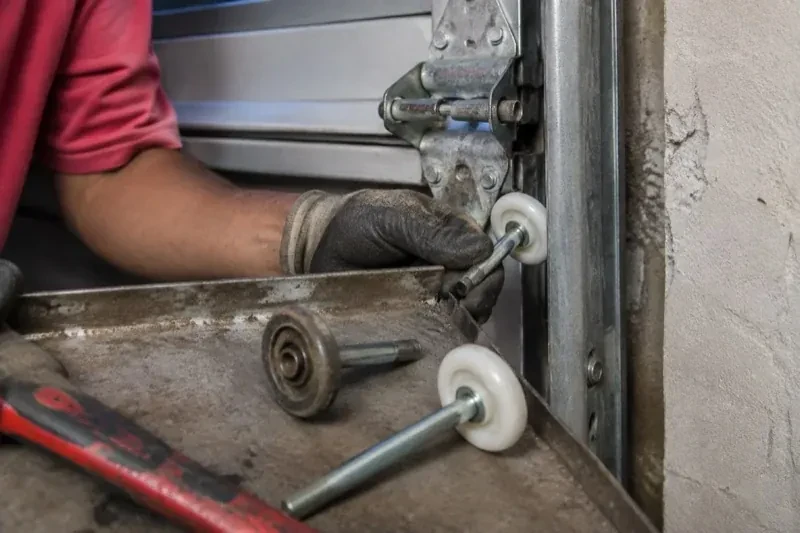
Springs & Hardware
How often should the whole door be inspected?
Industry guidance suggests a monthly visual and listening check by the homeowner, with the door closed and then in motion, and a yearly visit from a trained door systems technician who goes over springs, cables, rollers, hinges, track, balance and the opener's safety functions. Rollers themselves are worth a look twice a year, and they belong on the list whenever springs or cables are being replaced. A door used many times a day earns more frequent attention. Garage Door Roller Replacement
Will new hinges make the door quieter?
Often noticeably. A cracked or loose hinge is the source of many pops, clicks and rattles, and a hinge that holds its roller square lets the wheel run flat instead of scraping the track lip. Combined with fresh lubricant on the knuckles and rollers, the door settles into a steady rumble. Any noise that remains usually points to the rollers, the opener chain or the springs, which the technician can identify for you. Garage Door Hinge Replacement
What happens during the visit?
The opener is disconnected and the door clamped. The technician identifies the track type and layout, checks each vertical run for plumb, spacing and fixing, looks at the jamb wood, the curve, the flag brackets, the horizontal runs and their hangers, and how each roller sits. Damaged pieces are dressed or replaced, brackets refixed into sound wood, the geometry reset, rollers reseated, springs re-tensioned if they were unloaded, and the door balanced and the opener tested. Garage Door Track Repair or Replacement
What is the difference between a lift cable and a safety cable?
A lift cable does the work: it connects the door's bottom corner to the spring system and carries the door's weight. A safety or containment cable does no lifting at all. It runs through the middle of an extension spring and is anchored at both ends so that if the spring breaks, the pieces stay put. Torsion springs sit on a shaft and do not need one. Garage Door Cable Replacement
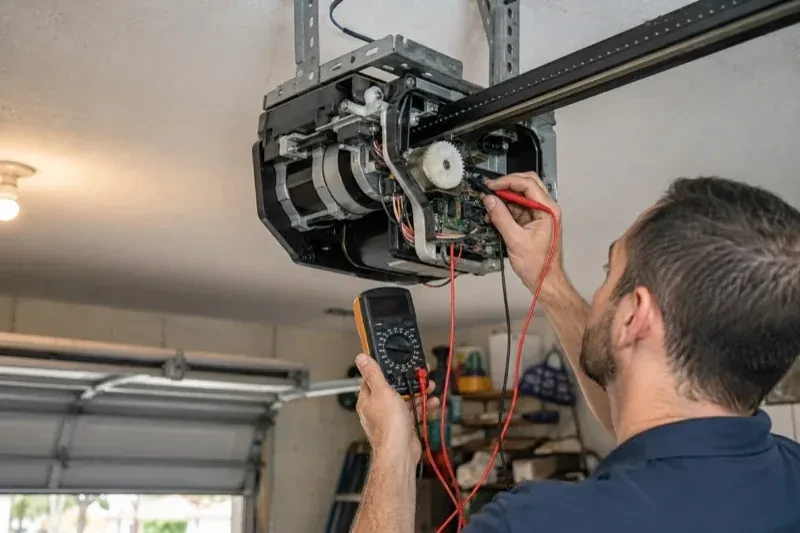
Openers & Access
How old is too old to repair?
Age alone is not the test; parts and safety are. The technician checks the exact model and part numbers, because even a unit from the last two decades can have a board, sensor or trolley that is no longer made. Where the parts are available, a repair is usually straightforward. Where a key part is discontinued with nothing to replace it, or the unit predates photo eyes, replacement is the sounder choice even for a small fault. The technician tells you which side of that line your unit sits on. Garage Door Opener Diagnosis and Repair
Will the safety reversal be tested as part of the repair?
Always, and after every adjustment, because changing tension, limits or force changes how the operator senses an obstruction. The door is closed onto a 38 mm block on the floor and must return to open on contact, then closed again while the low sensor beam is interrupted and must reverse the same way. If either test fails the settings are revisited until both pass, and you are shown the tests so you can repeat them monthly. Chain-Drive Opener Repair
What should I do in the garage before the technician arrives?
Park the cars outside and leave the floor beneath the rail and the door's path open so a stepladder can be set at either end. Lift bicycles and boxes off hooks near the rail. Keep the remotes and wall control within reach and know where the operator plugs in. If the door is stuck closed with a car inside, mention it when booking. Belt-Drive Opener Repair
The door is frozen to the floor. Why does the opener reverse?
Because the operator is protecting the door. Its force setting is tuned to the small effort a balanced door needs, so a seal glued to the concrete by ice registers as an obstruction and the door heads back up rather than ripping the rubber or bowing the top panel. Loosen the seal with a plastic scraper or a hair dryer along the sill, then try again; a shovelled threshold before a cold night keeps it from recurring. Garage Door Opener Replacement
Installation & Upgrades
How do you determine the correct replacement size?
The technician measures the finished opening at several points and also records floor level, jamb alignment, headroom, sideroom and backroom. Those dimensions are checked against the selected door system and track arrangement. The nominal width and height are only the starting description; actual site measurements shape the order. Sectional Garage Door Replacement
What does an R-value tell me?
An R-value describes resistance to heat flow under stated test conditions. It is useful only when you know whether the figure applies to insulation material, a section or the complete door assembly. Ask for the published basis for the exact model. Air movement at joints, windows, perimeter seals and floor gaps also affects how the garage feels in real weather. Insulated Steel Garage Door Installation
How should I care for the replacement through winter?
Keep the threshold clear of packed snow and salt, wipe residue from exposed hardware, and watch that the bottom seal releases cleanly after freeze-thaw weather. Look for corrosion, loose visible fasteners, or uneven seal contact during routine observations. Springs, cables, and bottom brackets remain high-tension components, so adjustments are left to technicians with the proper tools. Wind-Rated Garage Door Replacement
Which materials are used for carriage-house garage doors?
Common choices include embossed steel sections, insulated steel with composite overlays, and wood or wood-faced sectional construction. They differ in weight, surface depth, grain, moisture response and care. Samples are helpful because photographs can flatten texture and alter colour. The chosen construction also guides spring sizing, reinforcement, fasteners and the kind of finish maintenance expected later. Carriage-House Garage Door Installation